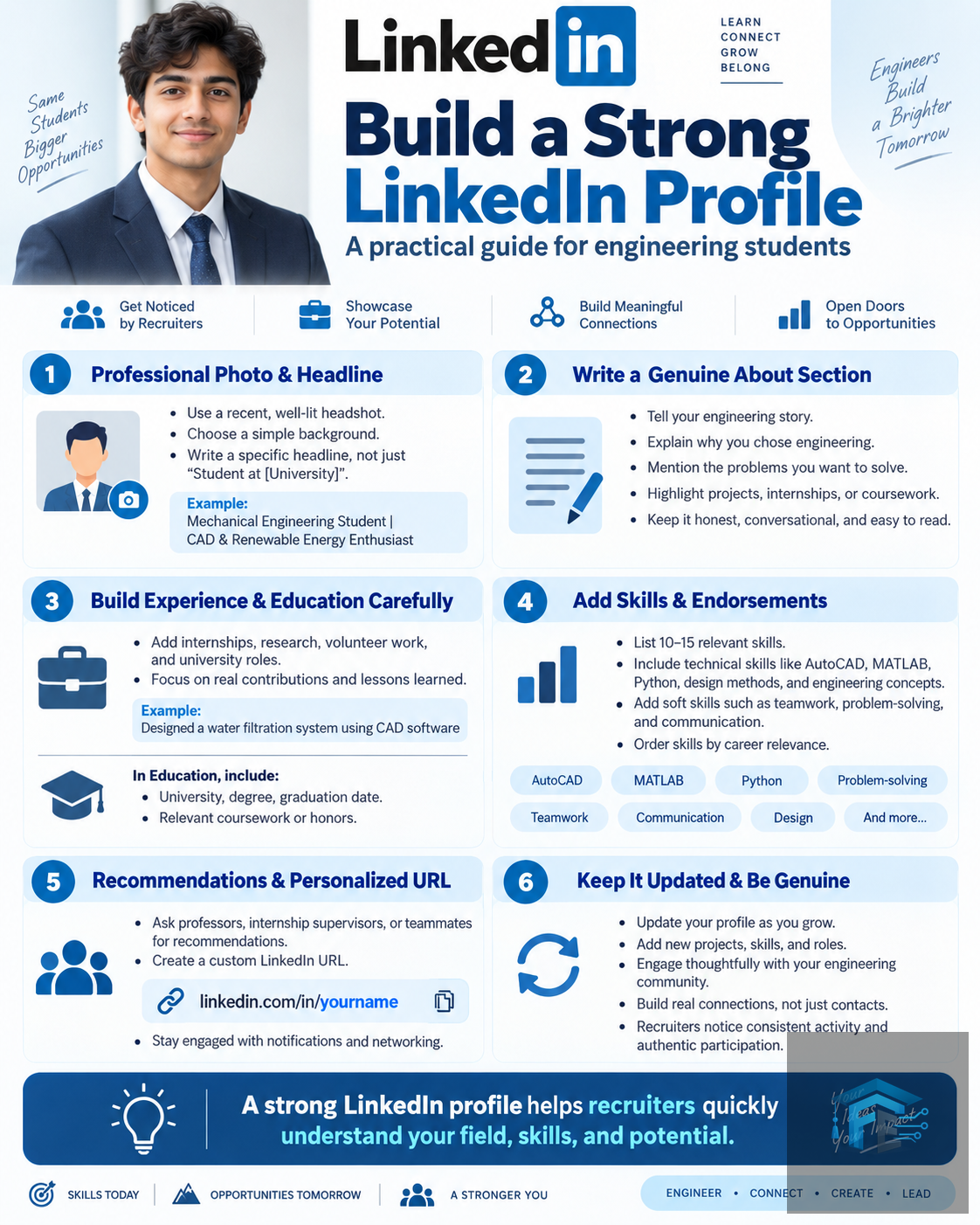
Start with a professional photo and a clear headline. Your profile photo should be a recent, well-lit headshot where you look approachable and professional—a simple background works best. Instead of just writing 'Student at [University]' in your headline, be more specific about your engineering discipline and interests. For example, 'Mechanical Engineering Student | CAD & Renewable Energy Enthusiast' tells viewers immediately what you focus on. Keep your headline concise but informative so recruiters scanning profiles quickly understand your field.
Write a genuine About section that tells your engineering story. Explain why you chose engineering, what problems you want to solve, and what skills you're developing. Mention relevant projects, internships, or coursework that shaped your interests. Keep it conversational and honest rather than overly formal—employers want to understand who you are, not read a robotic summary. Use simple language and break it into short paragraphs so it's easy to read on mobile devices.
Build your Experience and Education sections carefully, even if you don't have traditional work experience yet. List any internships, research projects, university roles, or volunteer work, describing what you actually did and what you learned. For each position, focus on tangible contributions: 'Designed a water filtration system using CAD software' is stronger than 'worked on engineering projects.' In your Education section, include your university, degree program, graduation date, and relevant coursework or honors. This gives context to potential employers reviewing your background.
Add Skills and Endorsements that reflect your actual abilities. Start by listing technical skills relevant to your engineering specialization—software tools like AutoCAD, MATLAB, or Python; design methodologies; or specific engineering concepts you've mastered. Add soft skills too, like teamwork, problem-solving, and communication. Keep your skills list between 10 and 15 items and order them by relevance to your career goals. As classmates and colleagues endorse your skills, it builds credibility.
Complete your profile with Recommendations and a personalized URL. Ask professors, internship supervisors, or group project teammates to write short recommendations about working with you—these carry real weight with recruiters. Create a custom LinkedIn URL using your name (linkedin.com/in/yourname) instead of keeping the default numeric one; this looks more professional when you share it in applications or email signatures. Enable notifications so you stay engaged with your network.
Keep your profile updated regularly and be genuine in all your interactions. As you complete projects, learn new skills, or take on new roles, update your profile to reflect your growth. Engage thoughtfully with posts in your engineering community, share insights from coursework or projects, and build real connections rather than just collecting contacts. Recruiters notice activity and genuine participation, and a profile that grows alongside your learning shows you're serious about your career.