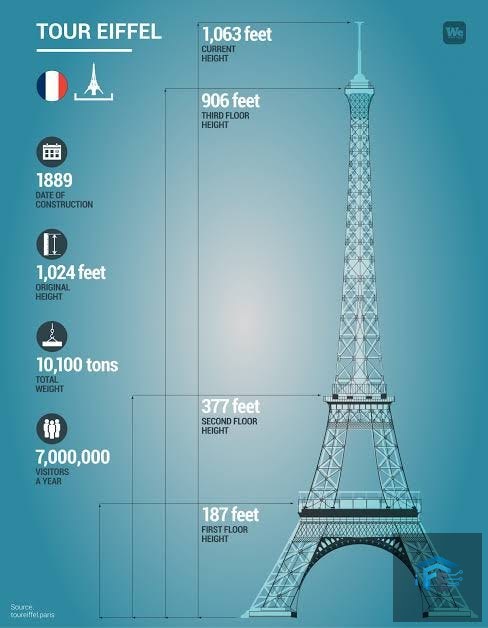
On a scorching summer day in Paris, the iconic iron structure literally stretches upward. The Eiffel Tower is made primarily of wrought iron, and like all metals, iron expands when its temperature rises. This property is called thermal expansion, and it's one of the most reliable laws of physics. When the sun heats the metal to perhaps 50°C or more on a sweltering day, the iron atoms vibrate more vigorously and take up slightly more space, causing the entire structure to grow in all directions—but the vertical growth is the most noticeable.
The scale of this growth might sound small, but it matters for a structure nearly 330 metres tall. Engineers who designed the tower understood this effect perfectly and built in expansion joints and a flexible design to accommodate the seasonal changes without damage. The tower also sways slightly in wind, and the thermal expansion works alongside these movements. In winter, when temperatures drop, the iron contracts again, and the tower shrinks back down.
This same principle is why you'll see gaps left in railway tracks, bridges, and building materials across Africa and around the world—engineers must always account for thermal expansion. Without these safety margins, structures would crack and fail as temperatures changed. The Eiffel Tower's summertime height gain is not a flaw; it's actually proof that the designers understood materials science and built something resilient enough to handle nature's daily stresses for over 130 years.