
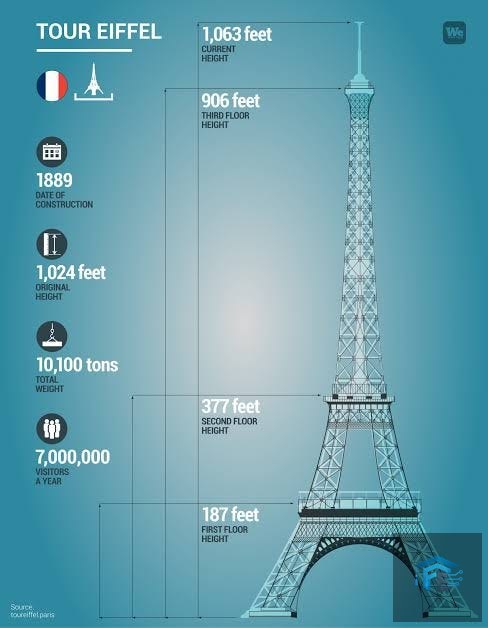
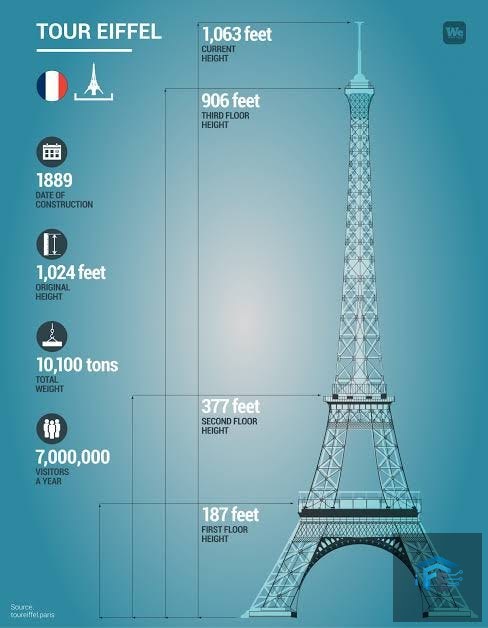
Here's a fact that surprises most people: Paris's most famous landmark isn't always the same height. When temperatures soar in summer, the iron structure of the Eiffel Tower physically expands and becomes taller. When winter arrives and temperatures drop, it shrinks back down. This isn't a trick or myth—it's basic physics at work on a massive scale.
The reason is thermal expansion. All materials expand when heated and contract when cooled. Iron, the material Gustave Eiffel chose for his 1889 tower, has a thermal expansion coefficient of about 12 micrometers per meter per degree Celsius. For a structure nearly 330 metres tall, this tiny rate of expansion adds up. On a hot summer day, the temperature difference between winter and summer can reach 30–40 degrees Celsius in Paris, causing the tower to grow by roughly 10–15 centimetres.
Engineers have to account for thermal expansion in all large structures. Bridges, railway tracks, and skyscrapers all have small gaps called expansion joints built into them. These gaps allow the structure to move slightly without cracking or buckling. The Eiffel Tower's iron lattice design actually helps it manage this expansion naturally—the open framework allows air to flow through and heat or cool the metal relatively evenly, and the structure's flexibility lets it sway and adjust without damage.
Modern measurements taken by France's national geographic institute have confirmed this phenomenon. It's a beautiful reminder that even the most solid-looking human creations are always moving and changing with their environment—sometimes literally growing right before our eyes.
No comments yet — be the first to share your thoughts.