
Billions of people in rural areas across Africa, Asia, Latin America, and other developing regions lack reliable access to electricity. Solar energy represents one of the most promising solutions to this energy crisis. Unlike grid extension, which can cost thousands of dollars per kilometer in remote areas, solar systems can be deployed quickly and independently, bringing power directly to communities that need it most.
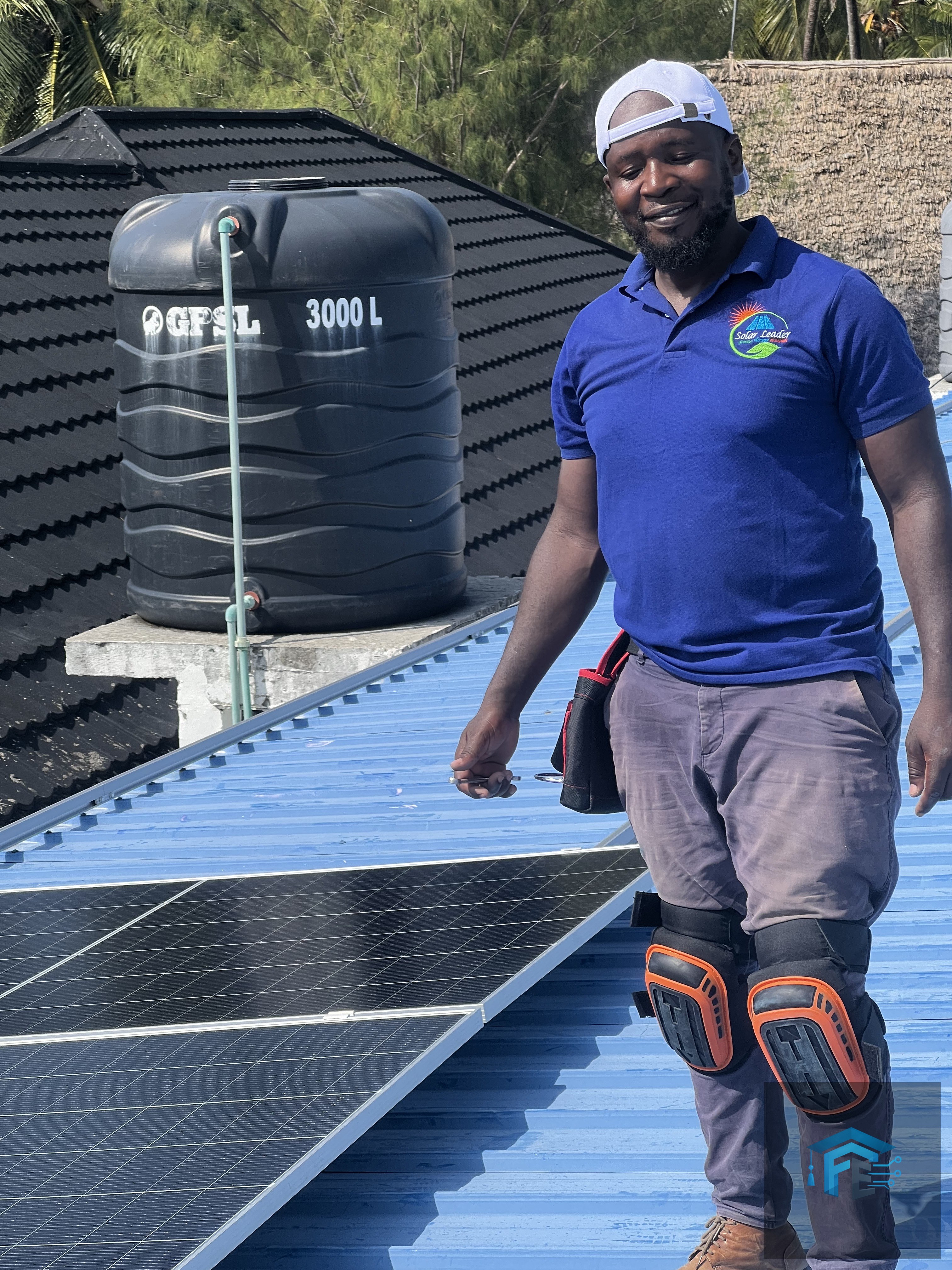
The advantages of solar technology in rural settings are substantial. Solar panels require minimal maintenance, have no fuel costs, produce no emissions, and can operate independently of centralized power infrastructure. A single rooftop installation—like the water pumping and storage system shown in the image—can provide clean water, refrigeration for medicines and food, lighting for homes and schools, and power for small businesses. In agricultural communities, solar-powered irrigation systems can dramatically increase crop yields and farmers' incomes. Solar also creates local employment opportunities, from installation and maintenance to sales and customer support.
Despite these benefits, significant barriers prevent solar from reaching its full potential in rural areas. The upfront capital cost of purchasing and installing solar systems remains prohibitively expensive for many rural families and small businesses, even though operational costs are low. While costs have fallen dramatically over the past decade, financing mechanisms and payment plans are often unavailable in remote communities where banking infrastructure is limited. Government subsidies and microfinance programs exist in some countries but are insufficient to meet demand.
Technical challenges also hinder adoption. Many rural areas lack trained solar technicians for installation, maintenance, and repairs. Supply chains are weak or nonexistent, making it difficult to source quality equipment and replacement parts. Communities may lack information about solar technology, leading to skepticism or misunderstanding about system reliability and performance. Additionally, poorly regulated markets have allowed substandard products to circulate, damaging consumer confidence when low-quality systems fail.
Infrastructure limitations compound these problems. Rural areas often lack the roads and transportation networks needed for efficient distribution of solar equipment. Unreliable supply of inverters, batteries, and other components means that systems installed today may become difficult or impossible to maintain tomorrow. Without established regulatory frameworks and quality standards in some regions, buyers have little protection against fraud or defective products.
Overcoming these barriers requires coordinated action. Governments can establish subsidies, tax incentives, and favorable tariffs for solar equipment. Organizations can develop local training programs to build a skilled workforce of solar technicians. Innovative financing models—including pay-as-you-go systems, community solar projects, and public-private partnerships—can make solar accessible to those who cannot afford large upfront investments. Strengthening supply chains and quality assurance standards ensures long-term system reliability. International cooperation and technology transfer can accelerate progress.
The energy crisis in rural areas is urgent, but it is not unsolvable. Solar technology offers a decentralized, sustainable pathway to electrification that respects local conditions and needs. By addressing financial barriers, building technical capacity, and establishing robust support systems, communities worldwide can harness the power of the sun to transform lives, strengthen economies, and protect the environment.