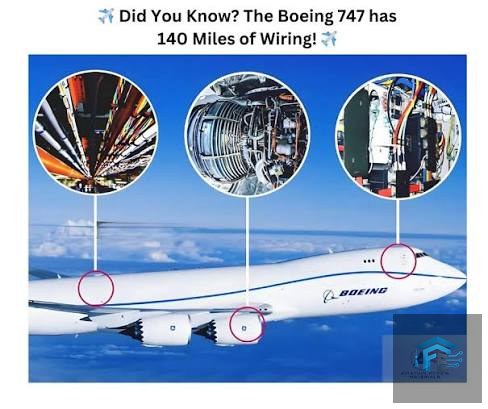
When you step inside a Boeing 747, you're surrounded by one of the most complex electrical systems ever built. The aircraft carries approximately 180 miles of wiring running through its fuselage, wings, and tail—a staggering amount when you think about fitting it all into a space roughly 230 feet long. This isn't just a single main cable; it's thousands of individual wires bundled into carefully organized harnesses, each one serving a specific purpose, from powering engines and flight controls to running navigation systems, cabin lighting, and the in-flight entertainment network.
Why so much wire? A 747 has four massive jet engines, complex hydraulic systems with multiple redundant backups, and sophisticated avionics that require constant power and signal transmission. Engineers design aircraft with extreme redundancy—if one system fails, backup systems must kick in instantly to keep the plane safe. This means duplicate wiring for critical systems like flight controls and landing gear. The wiring also needs to run through pressurized cabin areas, unpressurized cargo holds, and exposed wing sections, so paths can't always be direct.
Managing this wiring is an engineering puzzle in itself. Wires are organized into bundles using protective conduits and secured with clamps to prevent vibration damage during flight. They must be shielded from electromagnetic interference, routed away from hydraulic lines and heat sources, and color-coded so technicians can trace and maintain them. When a 747 goes in for major overhaul, much of this wiring must be inspected, tested, and sometimes replaced—a task that can take weeks and requires extreme precision to ensure every connection is perfect before the aircraft flies again.